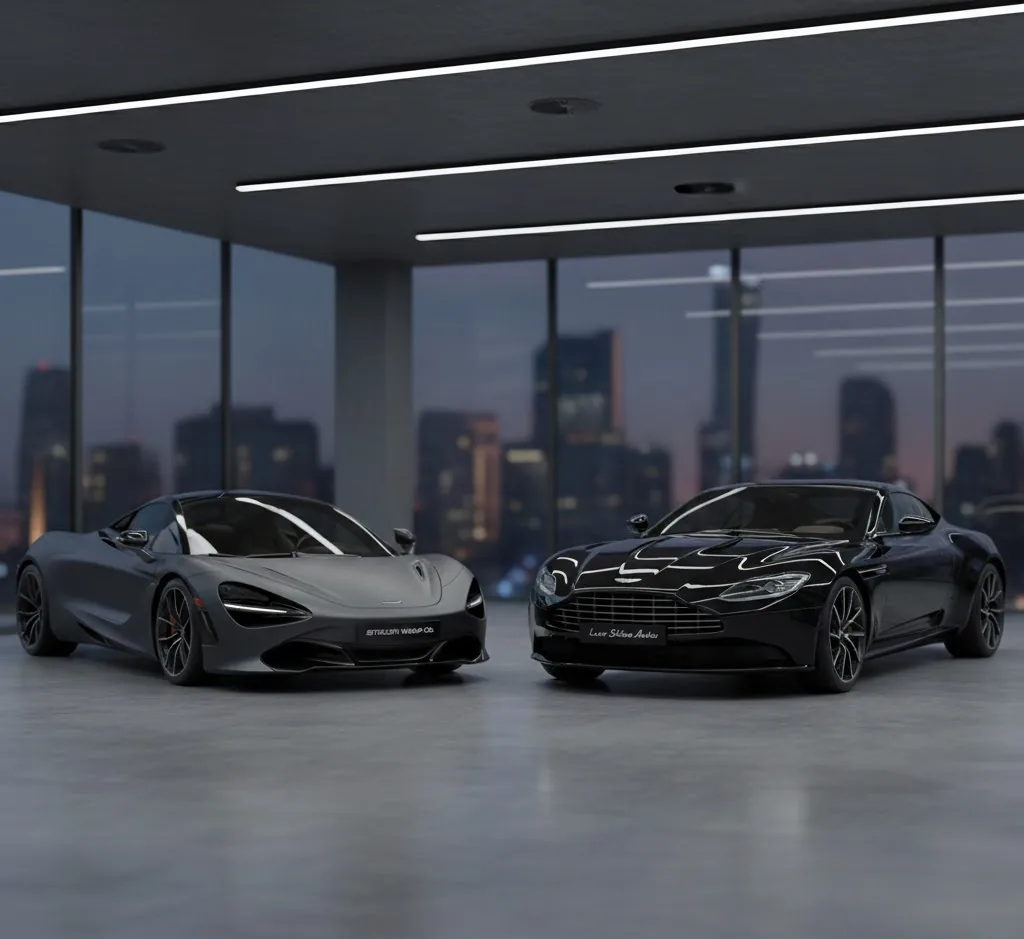
Matte and gloss are not two versions of the same look. They read differently across a parking lot, they wash differently on a Saturday morning, and they age differently through an Ottawa winter. Neither is a mistake. But one of them is probably wrong for you, and the quickest way to find out is to think less about the photo saved on your phone and more about how the car actually lives.
Visual Characteristics: Matte vs Gloss
Gloss behaves like paint, only more so. It throws light back at you, deepens whatever colour sits under it, and makes the body lines read from across a parking lot. Matte does the opposite. The film absorbs light instead of bouncing it, so the car presents as one flat, even surface with no sparkle anywhere. That flatness is the whole appeal: a matte car does not shine, it looms. Put the same red on two identical cars, one matte and one gloss, and you would swear they were different colours. Gloss makes a colour louder and richer; matte makes it quieter and stranger. Decide the finish before the colour, because the finish sets the character.
Is matte harder to maintain than gloss?
Matte is the needier finish. It shows fingerprints around the handles, it shows water spots after a careless rinse, and it shows fine scratches sooner than owners expect. It wants a gentle hand wash with pH-neutral soap and a patient, careful dry, every time. Gloss forgives more. Water beads and rolls off, fingerprints mostly vanish, and the surface tolerates an average wash without complaint. Its weakness is the swirl mark: sloppy washing works fine circular scratches into gloss more readily than into matte, and afternoon sun makes them obvious. Both finishes need washing on a schedule, especially from November to April when Ottawa keeps the panels salted, but matte asks you to be careful where gloss only asks you to be consistent.
Does a matte wrap last as long as gloss?
On lifespan, the two finishes are even. A premium film from 3M or Avery Dennison lasts the same in matte as in gloss, typically 5-7 years when it is looked after, and those films are built to take UV, temperature swings and ordinary wear. That matters in a city that freeze-thaws its way through March. The real difference is how the two age. Matte tends to show its miles more visibly, especially at door handles and panel edges where hands and jacket zippers do their slow work. Gloss collects wash swirls instead, and those usually stand out less than the marks a matte finish picks up. Neither ages badly if three things were true from the start: the install was clean, the film was good, and the washing never lapsed. Those three decide the lifespan far more than the finish does.
Style and Vehicle Matching
Some vehicles wear matte better than others. Sharp, modern bodywork and luxury sedans carry it well: the flat film turns hard creases into shadow lines and gives the whole car a stealthy, expensive presence, which is a big part of why the look keeps gaining ground. Matte black in particular has earned icon status, aggressive and understated at the same time. Gloss is the safe bet on nearly anything. It plays up a vehicle’s original character, carries vivid colour honestly, and on a sports car it earns its keep by tracing every curve and body line in light. Trucks and SUVs go either way and can look striking in both, depending on what you are after. A rough rule that mostly holds: creases and angles suit matte, classic curves suit gloss. Then let a sample panel on your actual car overrule the rule.
Making Your Choice
Pick matte if the understated look is worth some extra care to you, and be honest with yourself about that trade before you sign, not after. It is the finish for owners who want the car to read as something deliberate, apart from the gloss around it. Pick gloss if you want classic shine, easier upkeep and colour with real depth; it is the finish most cars were shaped for and most owners are happiest living with. And if you are stuck between the two, satin exists for exactly this reason, sitting between matte and gloss with a little reflectivity and a clean, modern face. Whichever way you lean, come look at samples on your type of vehicle before committing. A finish on a small swatch and a finish across a whole car behave differently, and the same film reads differently again depending on the body’s shape and the colour you choose. A short visit with sample panels settles most of these debates.