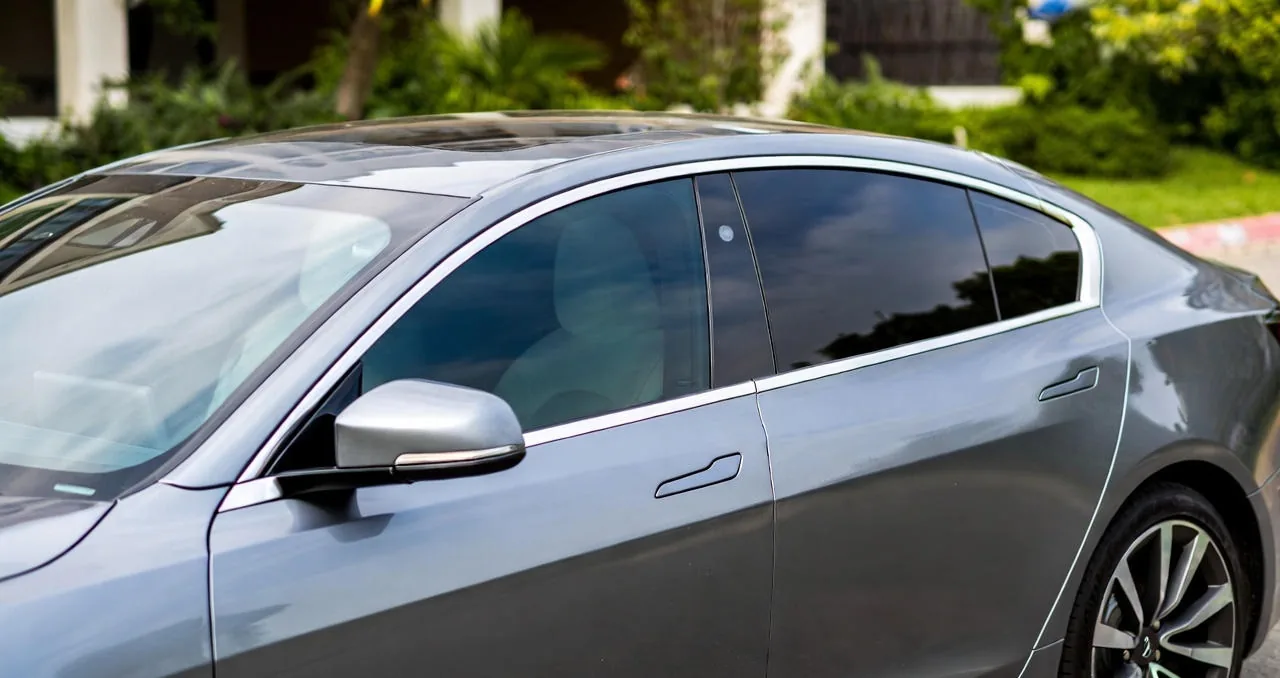
Most people buy tint for the look and keep it for everything else: the cabin that stops roasting in a parking lot, the dashboard that stops fading, the glare that stops chasing you down the 417. The catch is that films differ more than the brochures admit, and the darkness you choose is regulated. Here is what actually separates the films, what the law leaves in your hands, and what a proper installation looks like.
What does window tinting actually do?
Heat is the benefit you notice first. Film blocks a share of the infrared coming through the glass, so the cabin climbs more slowly in a July parking lot and the air conditioning spends less effort dragging it back down. UV is the benefit you notice years later. A quality film stops up to 99% of it, which protects your skin on long drives and does the same job for the interior, because UV is what fades seats and turns black trim grey. Privacy rides along with the darkness: people glance at tinted glass and move on. Glare drops too, and in Ottawa that is not just an August problem. Low winter sun bouncing off fresh snow on the Queensway blinds you as thoroughly as any summer afternoon. The sharper look is real, but it is the bonus, not the reason.
Which type of window tint is best?
Wrap Senators stocks ceramic and nano ceramic window tint, and nothing below them. Dyed and carbon film left our shelf because neither keeps its colour or its performance over the years the way ceramic does. For a full comparison of what the different film types offer and why ceramic is the premium tier, see Ceramic vs. Regular Window Tint.
Legal Considerations and Regulations
Tint darkness is measured as visible light transmission: the percentage of light that makes it through glass and film together. Most jurisdictions set limits on that number, and the pattern repeats even where the figures differ. Front side windows are held to tighter limits than the rears, and windshields are the most restricted of all, usually allowing nothing beyond a narrow band along the top. Past that pattern, the rules genuinely vary from province to province and state to state. We can quote you the exact VLT of any film on our wall. We cannot tell you what your province permits, because an installer is not a legal adviser, and compliance belongs to the person whose name is on the registration. Some places allow darker film with a medical exemption; some have separate rules for commercial vehicles or particular vehicle classes. Look up the current requirements where your vehicle is registered, then pick your shade.
Installation Process and Quality
From the waiting room, tinting looks like sticking film to glass. Up close it is cleaning, cutting and patience. The glass has to be genuinely spotless, because a single grain of dust locked under film shows for the life of the job. The film gets cut to the exact shape of each window, applied wet, then worked flat with a squeegee until no air or water remains, with a heat gun shaping it to the curve of the glass and a final trim squaring the edges. Budget several hours; more windows and steeper glass mean more time. The stakes are what make a professional worth paying: a rushed job bubbles, peels or lets go early, and there is no repairing bad tint, only stripping it and paying twice.
How long does window tint last?
New film has to cure before the windows move. Keep them up for 3 to 7 days, depending on the film type and the weather, and give it the long end of that range in the cold half of the year. After that, care is simple: clean with gentle products and soft cloths, and keep anything abrasive away from the film. An ice scraper run across the inside of a frosted window in January is the fastest way we know to ruin a good install. Treated properly, a quality film from a reputable manufacturer typically lasts 5 to 10 years, less if the vehicle lives a hard outdoor life. The film will tell you when it is done: bubbling, peeling edges, colour shift, or heat suddenly coming through as if nothing is on the glass. Any of those means replacement, not repair.
Ready to Tint Your Windows?
Wrap Senators installs two window films, ceramic and nano ceramic, and we do it same-day. Ask about either film and you get its exact visible light transmission figure; confirming the current rules for your province of registration stays with you, because the shade you pick is your call. Pricing, film options and booking are on our Window Tinting service page.