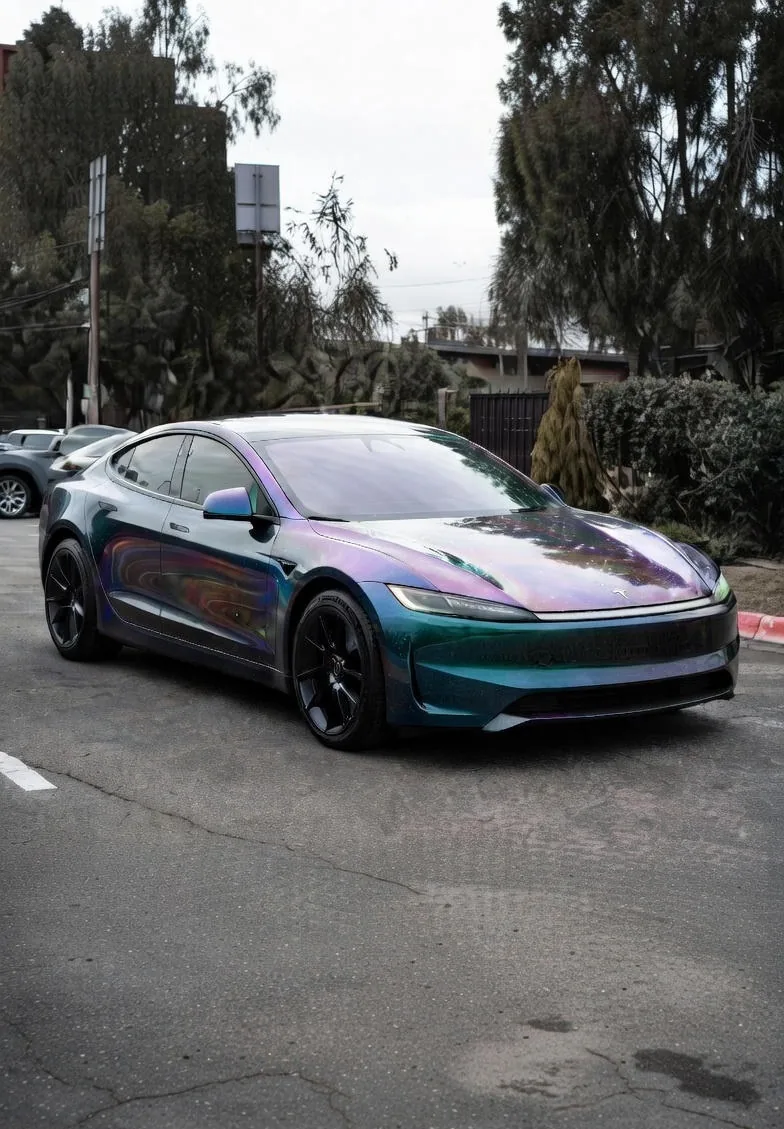
Most years the wrap trade changes at the pace of drying paint. 2025 was not one of those years. Self-healing top coats got faster and moved into coloured films, computer-aided cutting and augmented reality tightened up installs, and new materials pushed realistic lifespans further than the industry was comfortable promising before. Here is what actually changed, and what it means for a car that has to live through an Ottawa winter.
Self-Healing Film That Works in the Cold
Self-healing top coats are not new, but the 2025 formulations are the first that earn the name in a climate like ours. Older films needed hours of warm sun before a swirl mark pulled itself flat. Some of the new products close light scratches in minutes, and they keep healing across a much wider temperature range, which matters when the car spends half the year below freezing. The bigger shift for our customers: the chemistry has moved past clear PPF into coloured wrap films. A colour wrap that heals its own wash marring keeps its finish longer and asks less of you while it does.
Precision Tools on the Install Floor
The tooling caught up with the films in 2025. Computer-aided cutting systems hold complex designs to pixel-level accuracy, so a graphic that crosses three panels meets itself exactly where the proof said it would. Augmented reality alignment tools sounded like a trade-show gimmick until we watched one place an edge; they work. A shop running the full kit can cut installation time by up to 30% without giving anything back in quality, and the intricate patterns that used to be a coin toss now go on right the first time.
More Colours, More Finishes
The colour decks got noticeably thicker this year. Metallic, chrome and colour-shifting finishes that were unavailable, or rationed to one or two films, are now ordinary catalogue pages. Printing improved too: more vibrant colour, tighter colour matching, and photorealistic graphics that actually read as photographs. Satin and textured finishes joined the range, and the workhorse gloss and matte films got better at holding their look through years of weather. If you have a specific finish in your head, there is a decent chance somebody now makes it.
Films Built to Last Longer and Leave Cleaner
For an Ottawa car, this is the section that counts. The 2025 material generation resists UV better, tolerates temperature swings better, and stands up to chemicals better, and around here chemicals mostly means the salt brine sprayed on the 417 from November on. With proper maintenance, the new films can potentially stretch a wrap’s lifespan to 7-10 years. The adhesives improved in both directions at once: stronger bonding on the car, still a clean release at removal, which has been the trade’s stubborn compromise for as long as anyone has been doing this. Longer on the vehicle, kinder to the paint underneath.
Greener Vinyl, Same Standards
Sustainability stopped being a marketing slide in 2025. Manufacturers brought out films with recycled content, cleaned up their production processes, and put bio-based materials into testing that perform on par with traditional vinyl while cutting the environmental cost. Recycling programs for stripped-off wraps improved as well, and that matters, because every wrap comes off eventually. The part worth underlining is what did not change: nobody is asking owners to accept a weaker film. The green options are held to the same performance standard as the rest of the premium range.