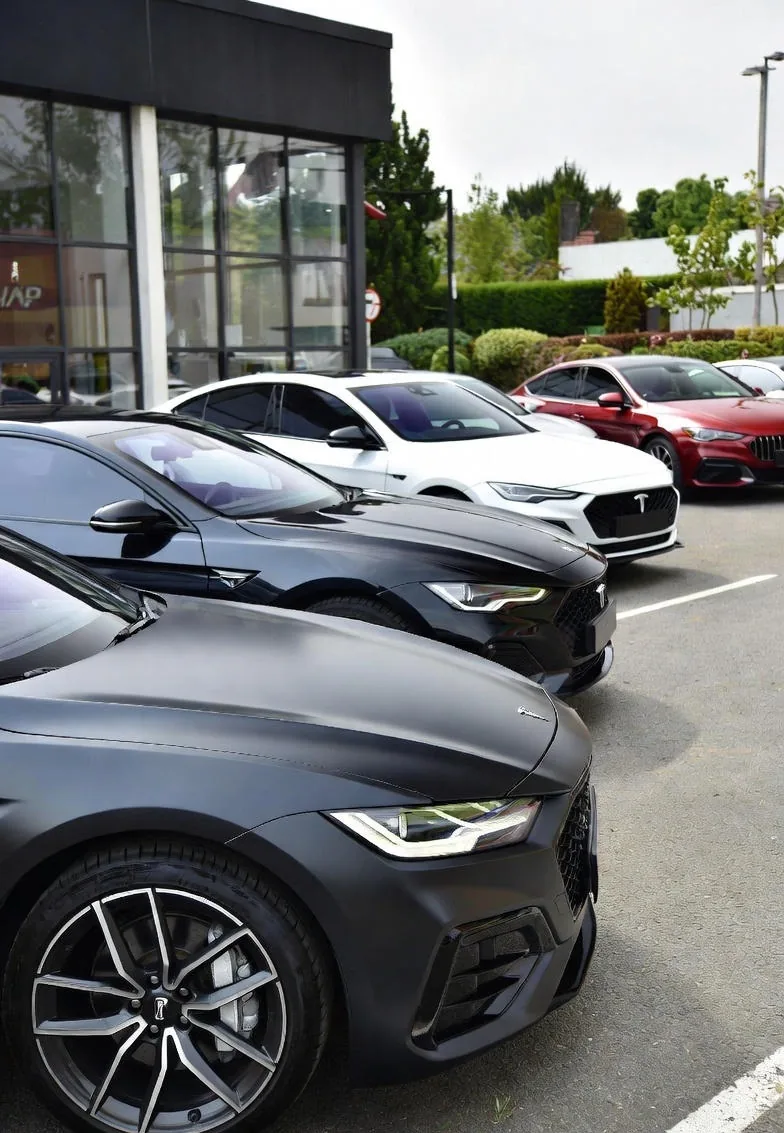
An EV takes vinyl the same way any other car does. What changes is everything around the vinyl: the cameras the car steers with, the charge port you open every single day, the heat a battery cycles through the panels around it. None of it is a problem for an installer who has done the work before. All of it is a problem for one who has not.
Will a Wrap Affect My EV’s Cameras and Sensors?
A modern EV, and a Tesla more than most, drives by camera. Autopilot, parking assistance and the safety systems all read the road through hardware mounted in the very panels we are about to wrap, and every one of those systems has to work exactly as well after the film goes on as before. So the job starts with a map. Before anything touches the car, we locate every camera and sensor on that specific vehicle, because positions shift between models and even between model years. The cuts around them are then made precisely, not approximately. An installer who wraps EVs regularly plans those cuts before the first panel. One who does not tends to discover them halfway through the job.
Will the Wrap Interfere with the Charging Port?
The charge port is the one door on the car you open every single day, sometimes with cold hands in a dark driveway in January. Lay film carelessly in that area and the door binds, the edge catches, and that is where the peeling starts. On a Tesla, the port door mechanism has to stay completely clear; the wrap cannot interfere with it at all. We trim and tuck the vinyl around the port opening so the door swings and seats exactly the way it did before. When the car leaves, you plug in that same night and never think about the wrap again. That is the standard.
Can Wrap Film Handle EV Battery Heat?
An EV makes heat. Charging makes it, driving makes it, and the battery system spends its life managing it, which means some panels see wider temperature swings than anything on a gas car. Stack an Ottawa winter on top, where the same panel goes from a heated garage to a frozen parking lot and back, and the film’s temperature rating stops being fine print. Quality vinyl is built for those swings, but “quality” is the word doing the work in that sentence. The premium films from 3M and Avery Dennison are tested for temperature resistance, and that is exactly why they are what we put on electric vehicles.
Paint Protection for EV Investment
An EV is a serious amount of money parked in a driveway, and keeping the paint intact is a large part of keeping the resale value intact. That is why so many EV owners choose paint protection film, either alongside a wrap or instead of one. PPF disappears on the car: the factory appearance stays exactly as it is, and the protection sits invisibly on top. The two are not either-or. PPF on the vulnerable areas with a partial wrap for the styling gives you protection where the road hits and personality where people look.
How Long Does a Wrap Last on an EV?
EVs are not all driven the same way, and the wrap notices. A car that only sees city blocks can stretch the wash interval a little; one that runs long highway trips down the 417 collects more grime and needs attention more often. The routine itself is the same as for any wrap: pH-neutral soap, and a look along the edges and seams while you dry. Keep that up consistently and the wrap holds its appearance and its protection for its full life, which can reach 5-7 years with proper care.