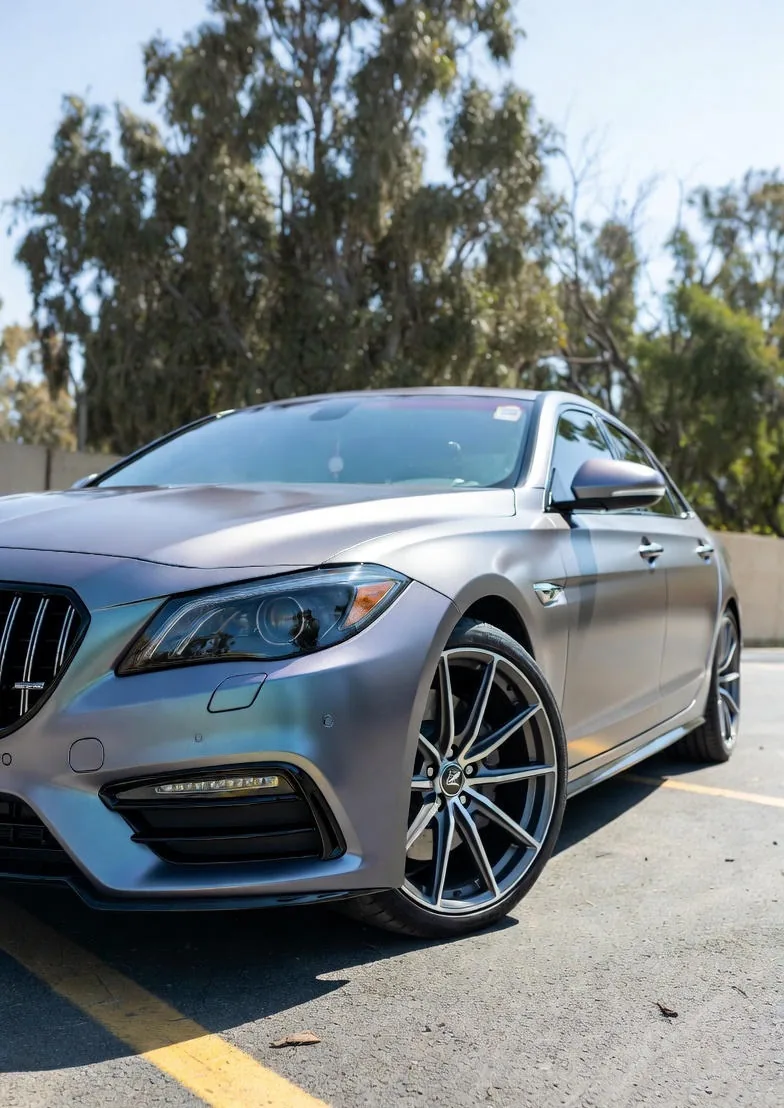
A wrap is one of the few upgrades to a vehicle you can undo, but the decisions behind it are harder to walk back. The panel that never got repaired, the film picked off a screen, the bill nobody budgeted for: each one follows the car for years. Here are the five things we ask every customer to settle before the vinyl comes off the roll.
1. Can You Wrap a Car With Dents or Rust?
Vinyl copies the surface it sits on. Every dent, deep scratch and rust bubble telegraphs through the film, and some of them read more clearly under fresh gloss vinyl than they did on tired paint. Small blemishes are no problem; a wrap hides those without complaint. Anything bigger needs bodywork first, and rust in particular has to be dealt with before film goes anywhere near the panel. Ottawa cars earn their rust honestly, between the salt and the freeze-thaw, so do not be surprised if a slow walk around the vehicle turns up a spot or two. At the consultation we go over the car panel by panel and tell you plainly what has to be fixed before we would put our name on the job.
2. Your Goals
Start with what you actually want the wrap to do. A full colour change means a full wrap; there is no way around that. If the goal is protection and you like the paint as it is, paint protection film is often the better tool, since it guards the finish while barely announcing itself. And if the budget or the ambition is smaller, a partial wrap covers the pieces that matter: a roof, a hood, the mirrors, an accent here and there. Protection, looks or both is the first question we ask, because the answer decides which product you should even be pricing.
3. Material Choice
The film matters more than most first-time customers expect. We work with premium vinyl from 3M and Avery Dennison because it lasts longer and holds its finish better than the bargain rolls, and the difference shows up long before the wrap gets old. Then comes the finish itself: gloss, matte, satin, or a specialty film if you want texture or a colour shift. Pick with your climate in mind. An Ottawa car gets sandblasted with salt on the 417 all winter and bakes in the sun all summer, so this is exactly the kind of place where materials built for hard winters and strong sun earn their price.
4. How Do You Wash a Wrapped Car?
Plan for the upkeep before you commit, not after. The routine is short: wash regularly with a pH-neutral soap, by hand when you can, in a touchless wash when you cannot. Keep harsh chemicals and abrasive brushes away from the film entirely. That is most of it, and it is less work than keeping paint nice, but it is not zero work. A wrap that gets this routine lasts noticeably longer than one that gets ignored, and in a salt town like this one, winter washing is the step people skip and then regret.
5. Budget and Timeline
Last, be honest about the money and the time. A full wrap is not a cheap accessory; it is skilled work, and skilled work is counted in days, not hours. Expect the installation to take several days, depending on how much complexity the vehicle brings. The price covers the material, the labour, and design time if the job is custom, and every one of those is worth paying for once you have seen what the cut-rate version looks like along the edges. The consolation for the spend: a good wrap protects the paint the whole time it is on, and when it comes off years later, the factory finish underneath is untouched.