Free tool
Window tint simulator: see every shade on a real car
See every shade we install on a real car, photographed at our studio before and after film. Pick a shade for the front and the rear windows: the lower the number, the darker the film, from 70%, close to factory glass, to 5%, the darkest we install. Then look out through it, by day and in the evening.
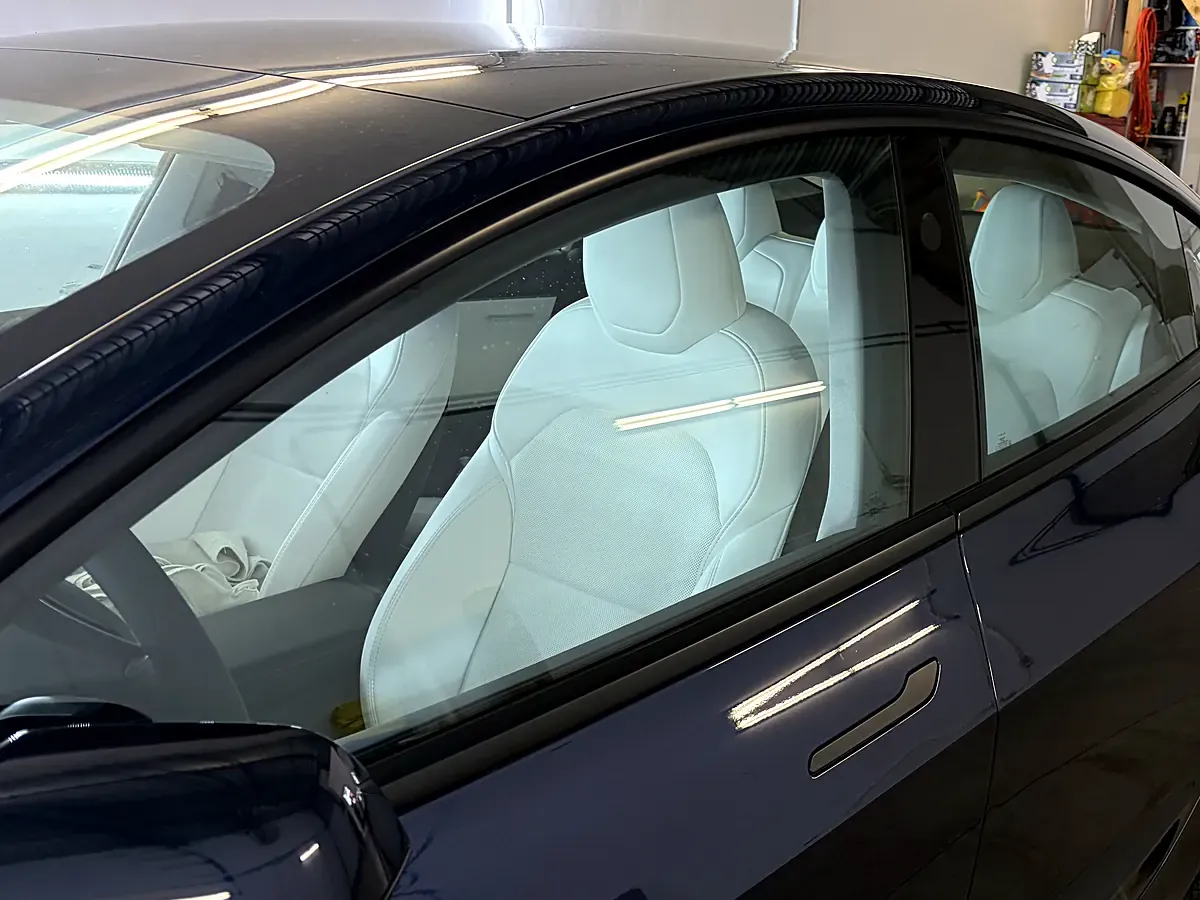
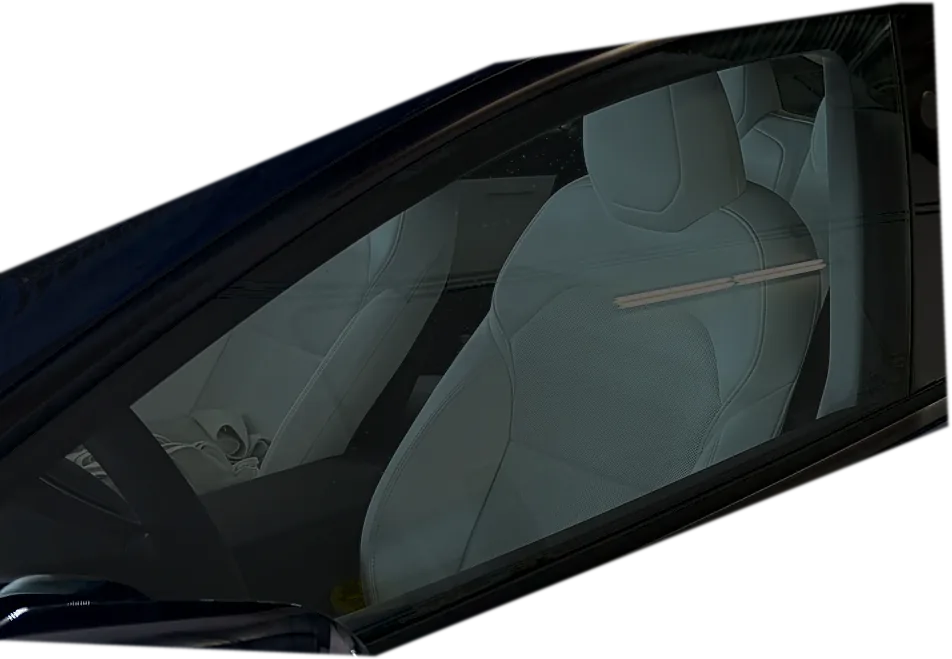
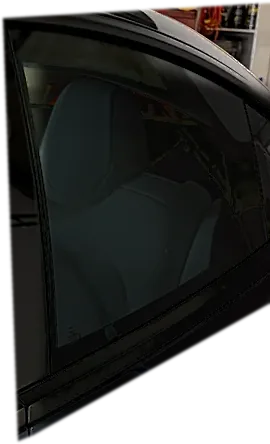
Tesla Model 3: front 35%, rear 20%
Shown on a Tesla Model 3 we tinted at our studio, photographed from the same spot before and after the film. Every shade is worked out from those two photos, so the reflections and the cabin are real. More vehicles are on the way.
The simulator needs JavaScript. The photo shows the car with 35% film on the front windows and 20% on the rear.
Screens differ in brightness and colour, so treat this as a close guide and look at the film on real glass at the studio before anything is cut. Street photos: Wikimedia Commons, public domain.
What this setup looks like
Front: A clear tint from the sidewalk; people inside show as shapes.
Rear: Dark from outside; hard to see in during the day.
Like what you see?
Call with your setup and ask to see both films on glass at the studio. Prices for every vehicle are on the window tinting page.
From the driver seat
What you see looking out
The view through your front side windows with the front shade you picked, with factory glass on the left for comparison.
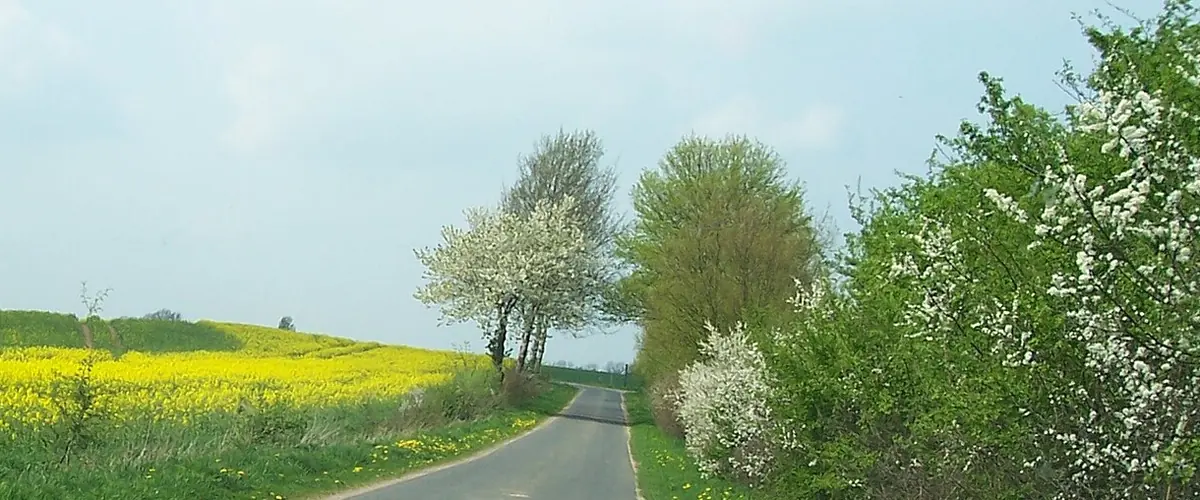
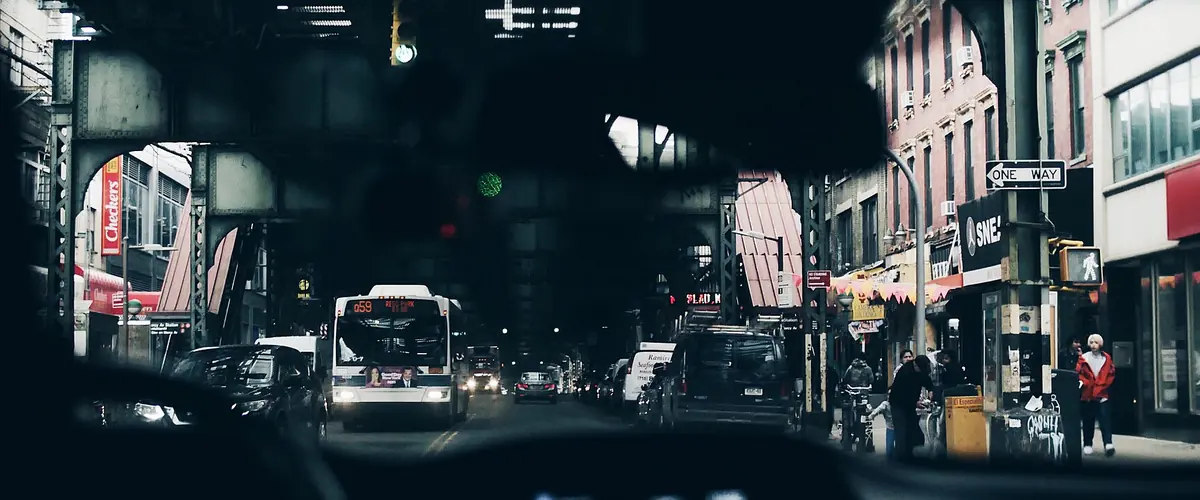
Noticeably dimmer; give your eyes a moment after dark.
Your eyes adapt to daylight, so a dark shade feels lighter on the road than it looks here; after dark they adapt less.
Shade guide
How dark is each tint percentage?
The five shades we install, in both of our films, from lightest to darkest.
| Film | Light let through | From the street, in daylight | Looking out, after dark |
|---|---|---|---|
| 70% | 70% of visible light | Reads close to factory glass; most people will not notice it. | Barely different from factory glass. |
| 50% | 50% of visible light | A light smoked look; faces inside are easy to make out in daylight. | Slightly dimmer, and the road stays easy to read. |
| 35% | 35% of visible light | A clear tint from the sidewalk; people inside show as shapes. | Noticeably dimmer; give your eyes a moment after dark. |
| 20% | 20% of visible light | Dark from outside; hard to see in during the day. | Dark at night; unlit streets and parking lots take more care. |
| 5% | 5% of visible light | The darkest we install: little or nothing shows from outside. | Very dark at night; mirrors and blind spots are much harder to read. |
Reading the number
Three things the percentage does not tell you
Lower means darker
Tint is sold by visible light transmission (VLT): the share of visible light the film lets through. A 35% film passes 35% of the light, so the smaller the number, the darker the film.
It looks darker from outside
From the street you see the cabin by light that crosses the film twice, in and back out. A 35% film passes 35% each way, about 12% in total, while the glass still reflects the sky. From the driver seat the light crosses once, which is why the same film looks lighter from inside.
Factory privacy glass stacks
Many SUVs, pickups and minivans have darker rear glass from the factory, and film multiplies with it: a 50% film on glass that already passes 20% lets through about 10%. Bring the vehicle by and hold the samples against your own glass.
Same shade, two films
The shade sets the look. The film sets the heat.
Both of our films come in all five shades, and a shade looks the same in either. Ceramic and nano ceramic both block 99% of UV and contain no metal, so GPS, phone and satellite radio signals pass through untouched. Nano ceramic also rejects up to 85% of infrared heat, the most of any film we offer, which is why a light nano ceramic shade can keep a cabin cooler than a darker film.
Your choice
The darkness is your decision
We do not choose for you, and we do not tell you what the law permits. Tint requirements differ by window and by province, and they change; we disclose each film’s VLT and ask you to confirm the current requirements where your vehicle is registered before you pick, and the darkness you choose is your decision. That posture is written into our tint compliance note.
Get a quote
Tell us about your vehicle
A few details and we come back with a real number, usually the same business day.
Questions